Celebrating Juneteenth
What is Juneteenth?
While the Emancipation Proclamation was issued on January 1st, 1863, freedom from slavery did not reach Galveston, Texas until June 19th, 1865. Juneteenth (a combination of June & Nineteenth) honors and celebrates the “complete” freedom of slaves in the US. Later that year, slavery was formally abolished on December 6th, 1865 when the 13th Amendment was ratified.
Today, Juneteenth is celebrated in different ways and typically celebrated on the third Saturday of June. Prior to this year, 49 States and the District of Columbia have formally recognized Juneteenth as a holiday. On Thursday, President Biden officially signed a bill declaring Juneteenth a federal holiday. Many celebrate “America’s Second Independence Day” through cookouts, rallies, festivals, and more. Juneteenth is also a day for activists to continue to educate others on African American history and culture along with continuing discussions on inequalities that persist in the US today. In 2020, many celebrated Juneteenth by marching and protesting in response to the murder of George Floyd. According to Lonnie G. Bunch III, the first African American to serve as secretary of the Smithsonian Institution, “For many people, Juneteenth raises the fundamental question of the power and impact of freedom, and the fragility of freedom.”
Local Juneteenth Events
Below are celebrations happening in the Twin Cities area. To find more events click here, or visit other social media platforms for more information.
Juneteenth Celebration, Hosted by Twin Cities Recovery Project – Minneapolis, MN
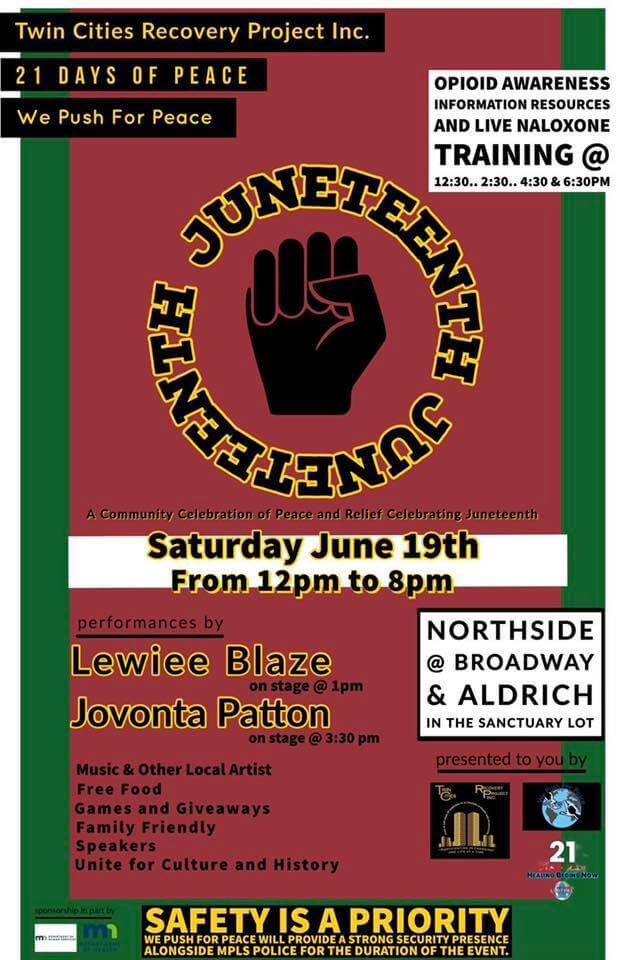
Juneteenth Celebration, Hosted by Minneapolis Park & Recreation Board: Daily events from 6/13-6/19. Visit the website to find more information.
Healing Together
The Steve Rummler HOPE Network launched the Healing Together Campaign to address the overdose rate disparities in Black communities through overdose prevention, awareness, and strategic partnerships. The goal of the campaign is to lower the barriers to overdose prevention resources for Black Minnesotans. You can find more information about overdose prevention, culturally specific treatment, and more by visiting the campaign page.