Fentanyl Test Strips
Stay Aware, Stay Safe
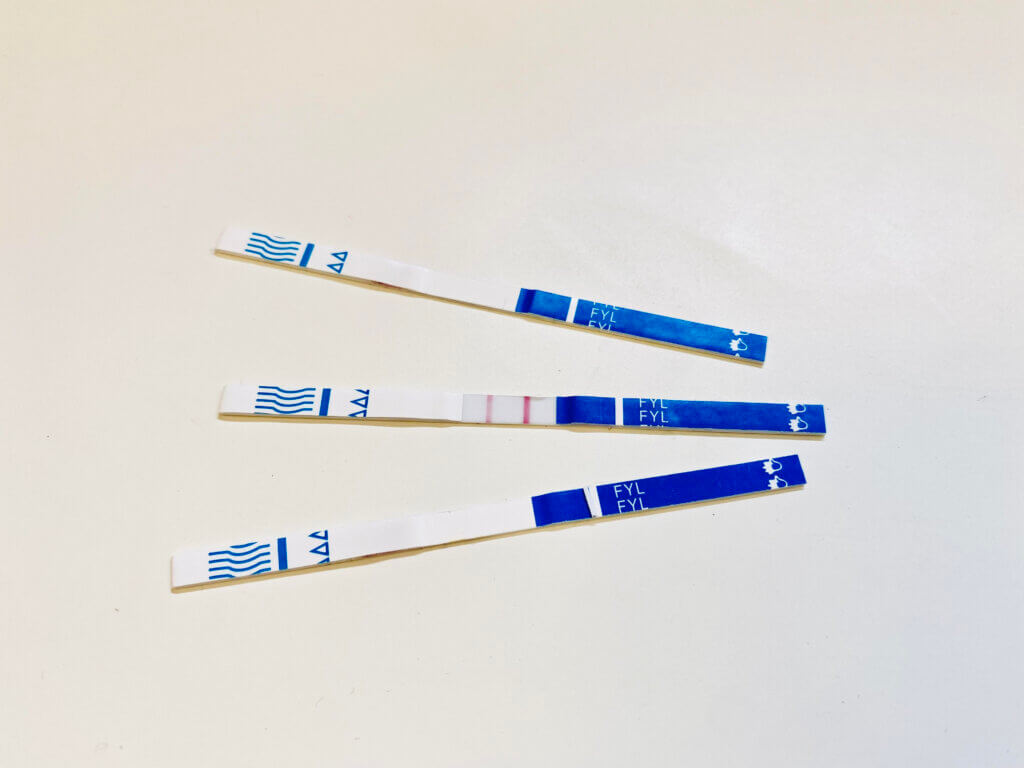
Fentanyl test strips (FTS) can detect the presence of fentanyl in both opioids and non-opioids. We offer free fentanyl test strip kits, as well as informational resources, to encourage safer use practices and prevent overdose deaths.
Please fill out this form if you’re an individual interested in a fentanyl test strip kit. Organizations or groups seeking FTS should contact odp@rummlerhope.org.
Fentanyl: What You Should Know
Video Notes: Fentanyl test strips (FTS) can detect the presence of fentanyl in both opioids and non-opioids. Click here for a list of fentanyl analogues detected by BTNX test strips, and more specific information about testing meth and MDMA.
- Fentanyl is a strong synthetic opioid that has been used in clinical settings for decades and is often described as 80-100 times stronger than morphine, or about 50 times stronger than heroin. (National Harm Reduction Coalition)
- Fentanyl and other synthetic opioids are the most common drugs involved in overdose deaths. (National Institute on Drug Abuse)
- Fentanyl, in its prescription form, is known by such names as Actiq®, Duragesic®, and Sublimaze®. Street names for fentanyl or fentanyl-laced heroin include Apache, China Girl, White China, Dance Fever, Jackpot, Murder 8, TNT, Tango and Cash, Friend, Goodfella, and Redrum. (MDH)
- Fentanyl moving through the street market comes in a powder form and can be injected, smoked, or snorted. It has also been found in other drugs, like heroin, meth, cocaine, and pressed pills. (National Harm Reduction Coalition)
- Naloxone and Fentanyl Informational Card
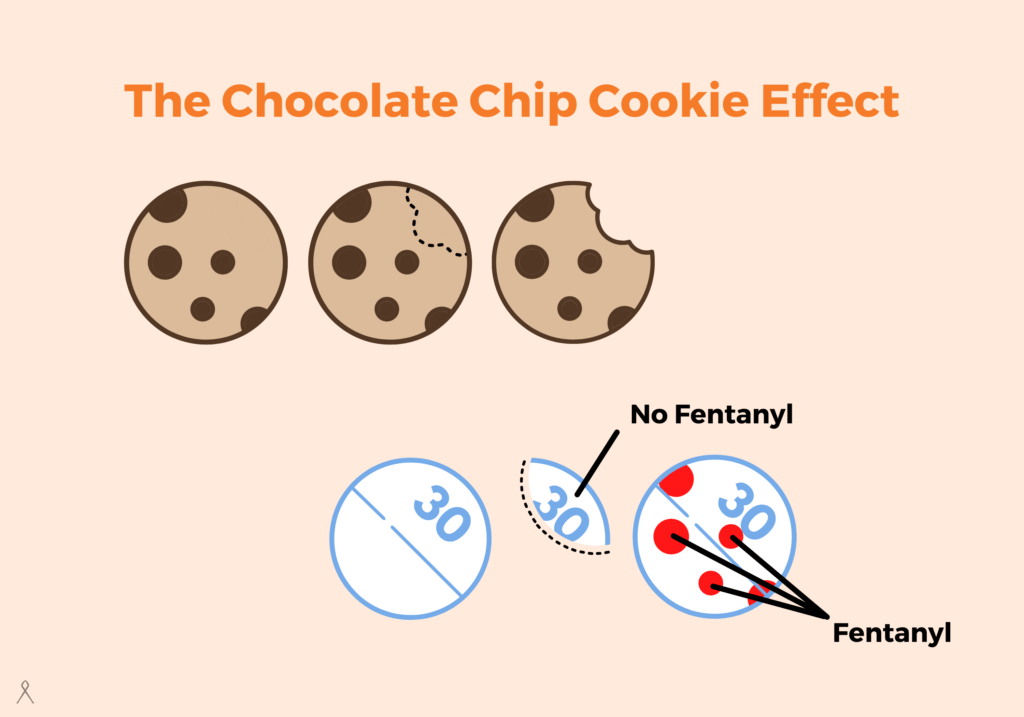
“Chocolate-chipping” or the “Chocolate Chip Cookie Effect.”
This concept illustrates the importance of properly preparing your sample. When fentanyl is mixed with other drugs, it never mixes evenly and can clump together. Think of your drug as the cookie and fentanyl as the chocolate chips. A pinch of heroin from one side of a baggie might contain no fentanyl at all, while a spot on the other side might contain a fatal dose. This also applies to pressed tablets, part of a tablet could contain fentanyl while another part has none. It’s safest, therefore, to test the entire dose you intend to consume, and crush entire tablets to be sure nothing is potentially missed. Remember that one dose may not be representative of a whole batch, so it’s recommended to test every time you use.
- You cannot overdose simply by touching fentanyl. It must be introduced into the bloodstream or a mucus membrane in order for someone to feel the effects. While there are fentanyl patches that can be placed on the skin for pain management, this is not the formulation being cut into other substances (National Harm Reduction Coalition)
- Fentanyl and fentanyl analogues (some stronger than fentanyl, some weaker) are not “naloxone resistant.” They are opioids and will respond to naloxone if someone is overdosing. When it appears that someone overdosing is not responding to naloxone it may be because:
- the naloxone needs more time to take effect (wait 2-3 minutes before administering more naloxone)
- they need more than one dose of naloxone (wait 2-3 minutes between doses)
- the naloxone was administered after the person had been without oxygen for too long (National Harm Reduction Coalition)
According to the Minnesota Department of Health: “A fentanyl analogue is a drug that has been designed to mimic the pharmacological effects of the original drug. Some manufacturers create new fentanyl analogs to avoid classification as illegal, policy restrictions on manufacturing, and/or detection in standard drug tests. New fentanyl analogs are being made regularly.”
- It’s important to note that fentanyl test strips may not detect every fentanyl analogue, so you should always proceed with caution
- For a full list of analogues detected by BTNX fentanyl test strips, click here.
If you intend to proceed with use after testing, below are some safer use strategies. Remember that regardless of your test result, it’s always best to exercise caution:
- Never Use Alone. Try to never use alone if possible. We’re safer together. If you are using alone, practice extra caution. Have someone you trust check on you so they can intervene in the event of an overdose.
- Always carry naloxone/NARCAN®. Be familiar with the signs of an overdose and be prepared to respond with naloxone, no matter what drug you’re using. If you are in need of a naloxone kit or overdose rescue training, Steve Rummler HOPE Network can help!
- Stagger use within your group. If you’re using with a group, make sure someone is always alert and ready to respond with naloxone/NARCAN®.
- Have a plan. In MN, Steve’s Law provides limited criminal immunity to an individual seeking help in the event of an overdose and the person experiencing the overdose. Make sure there is a person designated to seek help and that person stays alert.
- Try to use only one substance at a time. Mixing substances (including alcohol) can produce stronger, unpredictable, and dangerous effects and may increase the risk of overdose.
- Do a test dose. Start with a smaller dose, especially when using a new drug or getting your drug from a new source.
- Use sterile supplies. Using sterile supplies (clean needles and cookers, sterile water, etc) to prepare and administer your drugs can help reduce risk of infection and contracting hepatitis or HIV. These supplies can be found at syringe exchange programs. Scan the code below for a list of local providers.
- Smoke or snort instead of injecting. Injecting carries the highest risk for overdose, so shifting to snorting or smoking may help reduce risk. You can still OD by smoking/snorting, especially with fentanyl. So start slow.
- Use slowly & carefully. Because fentanyl is so strong, a little goes a long way and overdose can occur quickly. Give yourself time between doses. Fentanyl acts fast but it’s different for everyone.
Source: National Harm Reduction Coalition
-
How to Test Video Notes: Fentanyl test strips (FTS) can detect the presence of fentanyl in both opioids and non-opioids. Click here for a list of fentanyl analogues detected by BTNX test strips, and more specific information about testing meth and MDMA.
-
Fast Facts - Fentanyl is a strong synthetic opioid that has been used in clinical settings for decades and is often described as 80-100 times stronger than morphine, or about 50 times stronger than heroin. (National Harm Reduction Coalition)
- Fentanyl and other synthetic opioids are the most common drugs involved in overdose deaths. (National Institute on Drug Abuse)
- Fentanyl, in its prescription form, is known by such names as Actiq®, Duragesic®, and Sublimaze®. Street names for fentanyl or fentanyl-laced heroin include Apache, China Girl, White China, Dance Fever, Jackpot, Murder 8, TNT, Tango and Cash, Friend, Goodfella, and Redrum. (MDH)
- Fentanyl moving through the street market comes in a powder form and can be injected, smoked, or snorted. It has also been found in other drugs, like heroin, meth, cocaine, and pressed pills. (National Harm Reduction Coalition)
- Naloxone and Fentanyl Informational Card
“Chocolate-chipping” or the “Chocolate Chip Cookie Effect.”
This concept illustrates the importance of properly preparing your sample. When fentanyl is mixed with other drugs, it never mixes evenly and can clump together. Think of your drug as the cookie and fentanyl as the chocolate chips. A pinch of heroin from one side of a baggie might contain no fentanyl at all, while a spot on the other side might contain a fatal dose. This also applies to pressed tablets, part of a tablet could contain fentanyl while another part has none. It’s safest, therefore, to test the entire dose you intend to consume, and crush entire tablets to be sure nothing is potentially missed. Remember that one dose may not be representative of a whole batch, so it’s recommended to test every time you use.
-
Myths - You cannot overdose simply by touching fentanyl. It must be introduced into the bloodstream or a mucus membrane in order for someone to feel the effects. While there are fentanyl patches that can be placed on the skin for pain management, this is not the formulation being cut into other substances (National Harm Reduction Coalition)
- Fentanyl and fentanyl analogues (some stronger than fentanyl, some weaker) are not “naloxone resistant.” They are opioids and will respond to naloxone if someone is overdosing. When it appears that someone overdosing is not responding to naloxone it may be because:
- the naloxone needs more time to take effect (wait 2-3 minutes before administering more naloxone)
- they need more than one dose of naloxone (wait 2-3 minutes between doses)
- the naloxone was administered after the person had been without oxygen for too long (National Harm Reduction Coalition)
-
Fentanyl Analogues According to the Minnesota Department of Health: “A fentanyl analogue is a drug that has been designed to mimic the pharmacological effects of the original drug. Some manufacturers create new fentanyl analogs to avoid classification as illegal, policy restrictions on manufacturing, and/or detection in standard drug tests. New fentanyl analogs are being made regularly.”
- It’s important to note that fentanyl test strips may not detect every fentanyl analogue, so you should always proceed with caution
- For a full list of analogues detected by BTNX fentanyl test strips, click here.
-
Reducing Overdose Risk If you intend to proceed with use after testing, below are some safer use strategies. Remember that regardless of your test result, it’s always best to exercise caution:
- Never Use Alone. Try to never use alone if possible. We’re safer together. If you are using alone, practice extra caution. Have someone you trust check on you so they can intervene in the event of an overdose.
- Always carry naloxone/NARCAN®. Be familiar with the signs of an overdose and be prepared to respond with naloxone, no matter what drug you’re using. If you are in need of a naloxone kit or overdose rescue training, Steve Rummler HOPE Network can help!
- Stagger use within your group. If you’re using with a group, make sure someone is always alert and ready to respond with naloxone/NARCAN®.
- Have a plan. In MN, Steve’s Law provides limited criminal immunity to an individual seeking help in the event of an overdose and the person experiencing the overdose. Make sure there is a person designated to seek help and that person stays alert.
- Try to use only one substance at a time. Mixing substances (including alcohol) can produce stronger, unpredictable, and dangerous effects and may increase the risk of overdose.
- Do a test dose. Start with a smaller dose, especially when using a new drug or getting your drug from a new source.
- Use sterile supplies. Using sterile supplies (clean needles and cookers, sterile water, etc) to prepare and administer your drugs can help reduce risk of infection and contracting hepatitis or HIV. These supplies can be found at syringe exchange programs. Scan the code below for a list of local providers.
- Smoke or snort instead of injecting. Injecting carries the highest risk for overdose, so shifting to snorting or smoking may help reduce risk. You can still OD by smoking/snorting, especially with fentanyl. So start slow.
- Use slowly & carefully. Because fentanyl is so strong, a little goes a long way and overdose can occur quickly. Give yourself time between doses. Fentanyl acts fast but it’s different for everyone.
Source: National Harm Reduction Coalition
Did you use your fentanyl test strips? Need more?
MN residents can receive no-cost FTS kits from SRHN and our community partners.
If you have previously used a kit, please let us know about your experience!
*This form is for individuals only. Organizations or groups seeking FTS should contact odp@rummlerhope.org.

Frequently Asked Questions
Stay Informed, Fight the Fight,
Be Connected
Stay up-to-date with the Steve Rummler HOPE Network Mailing List.