About Opioids

What are Opioids?
Opioids, sometimes called narcotics, are a class of drug that includes prescription pain relievers (like oxycodone, hydrocodone, and tramadol), heroin, and fentanyl. Some opioids are naturally derived from the opium plant, like heroin, and others are synthetically manufactured, like fentanyl. Today, illicitly manufactured synthetic opioids are used frequently to lace other drugs or as counterfeit painkillers.

Prescription Opioids
Prescription opioids include powerful painkillers like Hydrocodone (Vicodin®, Norco®), Oxycodone (OxyContin®, Percocet®), Hydromorphone (Dilaudid®), and Tramadol (ConZip®, Ultram®).
When taken as prescribed, these medications may manage acute pain safely and effectively. However, it is possible to develop a substance use disorder even when taking opioid medications as prescribed. This risk rises with misuse, long-term use, and diversion.

Heroin
Heroin is made from morphine, which is a natural substance extracted from opium poppy plants grown in Southeast and Southwest Asia, Mexico, and Colombia. Heroin is typically a white or brown powder, or a black, sticky substance. There are many methods of consuming heroin – it can be mixed with water and injected, snorted, smoked, etc.

Synthetic Opioids
Synthetic opioids are manufactured in laboratories and have a chemical structure similar to naturally derived opioids like heroin. They are highly potent and can be fatal in small amounts, making accidental overdose common.
In their prescription form, synthetic opioids are used for pain management, often in surgical settings. Illicit synthetics, like fentanyl, are commonly used as cutting agents in other drugs or to produce counterfeit painkillers.

Effects of Opioids
Opioids can lead to physical dependence within a short time, as little as 4-8 weeks. In chronic users, abruptly stopping the use of opioids leads to severe withdrawal symptoms, including:
- Generalized Pain
- Chills
- Cramps
- Diarrhea
- Dilated Pupils
- Restlessness & Insomnia
- Anxiety
- Nausea & Vomiting
- Very Intense Cravings
When someone takes opioids, dopamine is released. Opioids trigger a surge of dopamine, causing an increased sense of pleasure. The desire to either feel pleasure, or avoid negative emotions or physical discomfort, becomes a powerful driver to take opioids again and again. Continued use of opioids effects how the body responds to these substances, which may lead to tolerance, dependence or addiction.
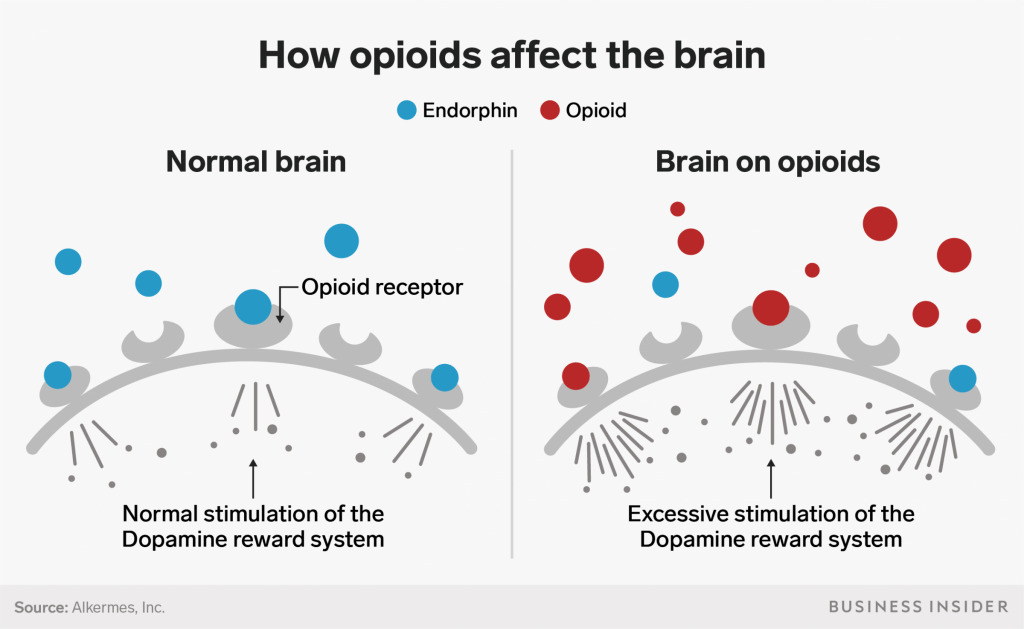
Opioids in the Brain
All opioids bind to specialized receptors in the nervous system. When activated, these opioid receptors block pain signals to the brain (analgesic effect) and increase the production of chemicals associated with pleasure (euphoric effect).
Continued opioid exposure can distort these systems over time, and drive increased use.