The Science of MAT
Opioids Impact Brain Chemicals
There are several biological and physiological changes that can occur in the brains of people with Opioid Use Disorder. Medications may beneficial in treating OUD, and can help individuals maintain recovery while these brain structures and functions to return to normal.

Opioids Activate Parts of the Brain That Reward Behavior
Dopamine is an important brain chemical that plays a role in creating feelings of pleasure and regulating behavior. Normal behaviors like eating cause dopamine to be released, generating positive emotions and feelings of pleasure which naturally fade away. When opioids are consumed, about twice as much dopamine is released in comparison to food, resulting in a much stronger and longer lasting positive emotional response. Eventually the brain attempts to compensate for these abnormal dopamine levels by decreasing natural dopamine production.
Opioids Change the Way the Brain Processes Dopamine
With repeated opioid use, the brain becomes desensitized to dopamine and more opioids are needed to achieve the same feeling of euphoria (otherwise known as “tolerance”). Sustained opioid use continues to decrease dopamine production. Low levels of dopamine cause individuals with OUD to feel symptoms of depression and brain fog when they are not taking opioids. Because dopamine plays a central role in behavior and cognition, this change in dopamine sensitivity also impacts decision-making, making it harder for individuals with OUD to regulate their opioid use.

The Brain Adjusts to Dopamine Increase by Producing More Adrenaline
Adrenaline is another brain chemical that regulates wakefulness, blood pressure, and breathing. Dopamine naturally suppresses adrenaline production in the brain. Excess dopamine generated by opioid use reduces adrenaline production. Low levels of adrenaline are what cause feelings of relaxation and drowsiness when individuals take opioids. The brain also attempts to compensate for this effect by producing more adrenaline than normal, aiming to keep dopamine and adrenaline levels in balance. When a person with OUD stops taking opioids, dopamine levels instantly drop but adrenaline levels remain high. Now the body has excess adrenaline, which causes anxiety, cramps, and diarrhea – the primary symptoms of opioid withdrawal.
Opioids Change How the Brain is Wired
OUD changes how parts of the brain are connected to each other, and how the brain responds to the world around it. Even though dopamine and adrenaline sensitivity will return to normal in a couple of months, rewiring the brain back to its original state can take years. Neuroimaging studies illustrate these changes: individuals in short-term recovery process pictures of drug use differently than individuals in long-term recovery, with distinct pathways and regions being activated in response.


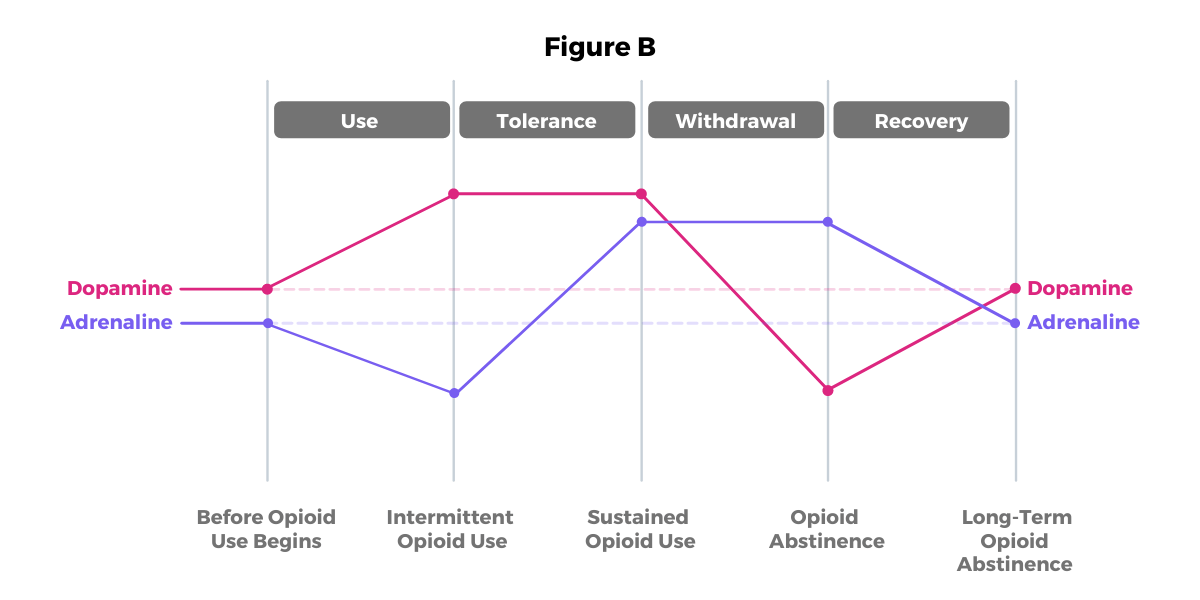
Figure A
Use
With intermittent opioid use, dopamine and mood increase above baseline. Receptor sensitivity does not change. No fundamental changes to the brain occur with occasional or short-term use.
Tolerance
With sustained opioid use, dopamine receptors become less sensitive over time. Tolerance changes and it now takes more opioids to achieve the same euphoric effects.
Withdrawal
It takes time for receptor sensitivity to return to normal. When opioids are initially removed, mood and dopamine levels drop below baseline due to decreased receptor sensitivity. This is withdrawal.
Recovery
With intermittent opioid use, dopamine After 4 to 8 weeks, receptor sensitivity will return to normal. This allows for mood and dopamine to return to their normal levels as part of the recovery process.
Figure B
Use
With intermittent opioid use, dopamine increases and adrenaline production is suppressed. This contributes to a feeling of relaxation when taking opioids.
Tolerance
With sustained opioid use, the brain compensates for increased levels of dopamine by increasing the amount of adrenaline it produces.
Withdrawal
When opioids are removed, dopamine levels quickly drop but adrenaline levels remain high. This excess adrenaline can cause symptoms like anxiety, cramps, and diarrhea.
Recovery
With intermittent opioid use, dopamine After 4 to 8 weeks, receptor sensitivity After 4 to 8 weeks, dopamine and adrenaline levels will return to normal and symptoms of anxiety, cramps, and diarrhea can dissipate.
Summary
The use of opioids can quickly spike receptor activation, then return the system to, or below, the baseline. This abrupt swing can encourage additional substance use. Each of the three FDA approved MAT medications work differently, but ultimately they have the same goal of transitioning an individual experiencing dependence into more normalized brain chemistry and function. Over time, medication dosages can be reduced as the brain begins to resume normal production of dopamine and adrenaline, and as patterns of behavior surrounding substance use are disrupted.
SRHN does not provide medical advice, diagnosis, or treatment. Any information published on this website or by this brand is not intended as a substitute for medical advice, and you should not take any action before consulting with a healthcare professional. Prior to starting any medication or treatment plan always consult a medical doctor or other qualified healthcare provider regarding questions that you may have about any past, present, or suspected medical conditions and how those medical conditions may be impacted by starting any medication or treatment plan. Never disregard professional medical advice in seeking treatment because of something you have read on the SRHN Website.