Opioid Withdrawal

A First Step, but Not the Last
Detoxification is a crucial process in removing toxins from the body’s system and an important early step on the path to recovery. After completing an assessment, individuals with SUD will need to stop active use and clear drugs from their system: this process is called detoxification, or detox. It is especially important for this stage of treatment to be monitored in a facility.
Managing Withdrawal During Detox
Structured detox programs are meant to guide a patient through withdrawal, manage cravings, and treat reactions caused by a physical dependence on a substance. If stopped “cold turkey”, individuals with OUD can experience severe withdrawal symptoms, which can have a negative impact on their physical wellbeing and recovery.
While the practice of providing medications to assist with withdrawal management is recommended by SAMHSA, it is not universally implemented, so it is important to be informed of other commonly utilized detox strategies (“drunk tanks”), or the possible misrepresentation of services provided. Some facilities use use outmoded strategies to “speed up” detoxification with full antagonists, like naltrexone or naloxone, which can cause the full and immediate onset of withdrawal. This “precipitated withdrawal” can be an extreme shock to the system and cause additional harm.


Medications for Withdrawal Management
Some facilities offer specific medications to reduce the physical effects of detox, this is known as withdrawal management. This approach uses medications (the same medications as used in longer term Medication-Assisted treatment programs) to transition a patient out of active use and into recovery.
SAMSHA now recommends managing opioid withdrawal symptoms with appropriate medication during detox:
“It is not recommended that clinicians attempt to manage significant opioid withdrawal symptoms (causing discomfort and lasting several hours) without the effective detoxification agents […] Management of this syndrome without medications can produce needless suffering in a population that tends to have limited tolerance for physical pain.“
Opioid Withdrawal Timeline
Opioid withdrawal is outlined in four distinct stages based on symptoms present and their intensity. The graphic below represents a general timeline, though everyone is different and exact stage lengths depend on the individual. Many factors can impact the opioid withdrawal timeline, including: type of opioid, administration route, tolerance level, polysubstance use, overall health, medical history, care during detox, etc.
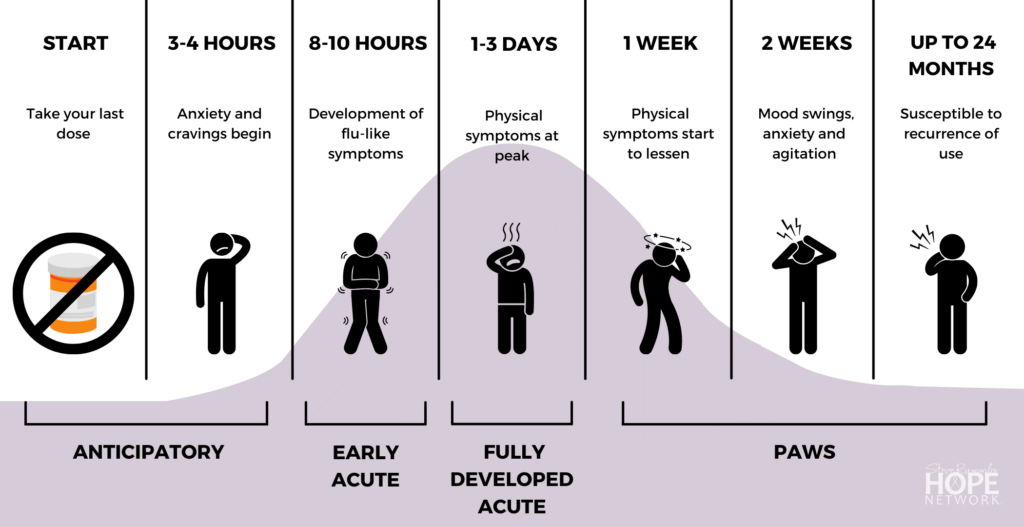
Anticipatory Stage
This stage begins 3-4 hours after the last dose is taken. Common symptoms include increased anxiety and fear linked to upcoming withdrawal symptoms, along with cravings.
Early Acute Stage
This stage begins 8-10 hours after the last dose is taken. Common symptoms include increased anxiety and cravings, along with flu-like symptoms of nausea and stomach aches.
Fully-Developed Acute Stage
This stage begins 1-3 days after the last dose is taken. This is when physical symptoms are at their maximum severity. Individuals may experience body tremors, insomnia, high blood pressure and heightened cravings.
PAWS (Post-Acute Withdrawal Syndrome)
This stage represents the period of time after the fully-developed acute stage and lasts up to 24 months. Acute symptoms are lessened, however individuals may experience mood swings, anxiety, and agitation, and are considered susceptible to recurrence of use.
The Importance of Detox Programs
It’s important to engage with a detox/withdrawal management program or provider during the detoxification process in order to monitor and provide medical assistance for additional health concerns (like dehydration) that may arise. This can include the use of anti-nausea or anti-inflammatory medications, or the withdrawal management medications described above, to decrease the physiological symptoms of withdrawal.
What’s After Detox?
Detox is a first step, but not the last! It is important to have plans in place to transition into a longer term recovery program once completing detox, as individuals may have increased risk of recurring use immediately following detoxification. This can include heightened psychological and physiological susceptibility, including anxiety or depression, prolonged withdrawal symptoms, reduced tolerance and behavioral changes. Many detox programs will help transition clients into residential or maintenance programs, to sustain their long term recovery.